I just loved this quote from Jimmy Wales, founder of Wikipedia. While clearing out some old bookmarks, I ran across the original posting from Ross Mayfield on the Many2Many blog back in November 2005. We're facing a moment in time when many of the heads of IT are standing in the way of how people really want to connect and put the technology to work for themselves.
“I think, partly because of the personality types who become programmers… I don’t know what it is exactly... a lot of programmers, seem to me to think that the whole point of social software is to replace the social with the software. Which is not really what you want to do, right? Social Software should exist to empower us to be human… to interact… in all the normal ways that humans do.”
13 February 2006


8 February 2006
My Dangerous Idea Got a Mention!
Wow! Open Source, a radio program in the USA, picked up on my dangerous idea in their Blogger Round-up. I'm completely chuffed.
iPod Etiquette
In the MacObserver, I read Vern Seward's column on iPod etiquette. Seward made a point about the growing culture of isolationism caused by our addiction to that little infectious thing we call the iPod. Are we choosing solitude over socialization?

As I rode in the train the other day, I looked around. Nearly everyone was either on their mobile phones (talking much too loud - why do we think we need to shout?) or sitting there lost in trance, listening to whatever was flowing through their earphones from their favorite little device (...and sometimes we're also forced to listen because they've got the volume so pumped up).
Do we need iPod etiquette? I think we need to establish some kind of etiquette because when we're tuned in to our devices, we are tuned out of the rest of the world. Accidents can happen, and we can miss something valuable. Is there a time and place for our precious little devices?
As I rode in the train the other day, I looked around. Nearly everyone was either on their mobile phones (talking much too loud - why do we think we need to shout?) or sitting there lost in trance, listening to whatever was flowing through their earphones from their favorite little device (...and sometimes we're also forced to listen because they've got the volume so pumped up).
Do we need iPod etiquette? I think we need to establish some kind of etiquette because when we're tuned in to our devices, we are tuned out of the rest of the world. Accidents can happen, and we can miss something valuable. Is there a time and place for our precious little devices?
2 February 2006
Cartoons Instigate Jihad against Western Newspapers
This morning while waiting for a meeting, I sat down and read the International Herald Trib. What immediately grabbed my attention was the article from Dan Bilefsky reporting from Paris about the furor caused by a series of 12 cartoons - depicting the Islamic prophet Muhammad in different contexts - that the Danish newspaper, Jyllands-Posten, had published at the end of October.
In the IHT article, they quote the cultural editor of Jylland-Posten, Flemming Rose:
”This is a far bigger story than just the question of 12 cartoons in a small Danish newspaper. This is a question of integration and how compatible is the religion of Islam with a modern secular society. How much does an immigrant have to give up, and how much does the receiving culture have to compromise?”
The article also said that other European media also published the cartoons and brought the story to their public. They quoted the French newspaper, France Noir, as saying that they had also published the cartoons ”…because they constitute the subject of controversy on a global scale, which has done nothing to maintain balance and mutual limits in democracy, respect of religious beliefs, and freedom of expression. No religious dogma can impose its view on a democratic and secular society”
This triggered my curiosity about value conflicts, so when I returned to the studio, I began an investigation to see if I could follow what had happened.
First, I found the cartoons in the Brussels Journal from 22 January 2006. Apparently, according to Islam religion, it is blasphemous for Muslims to make images of their prophet Muhammad. Because of this, Muslim fundamentalists threatened to bomb the Danish newspaper’s offices and kill the cartoonists.
In an editorial published 30 January 2006 by Carsten Juste, the editor of Jyllands-Posten wrote:
“In our opinion the 12 cartoons were moderate and not intended to be insulting. They did not go against Danish laws, but have evidently offended many Muslims, for which we apologize. Meanwhile a couple of offending cartoons have circulated in the Muslim world which were never published in Jyllands-Posten and which we would never have published if they had been offered to us. We would have dismissed them on the grounds that they breached our ethical limits.”
According to one of our local Amsterdam newspapers, De Volkskrant, Dutch cartoonists admitted last week that they do not dare to depict Muhammad out of fear for violent retaliations. Considering the escalating violence in our country right now and the percentage of active and radicalized Islamic extremists here, I can imagine that this self-imposed censorship is simply protective behavior. After all, The Netherlands runs on risk aversion.
Even so, there is a Muhammad Image Archive and even a comic book online and available for anyone to access.
What bothers me about this story is how can we resolve conflicts at the core cultural value level? In our westernized society, we believe so strongly in freedom of expression with equal treatment for all without regard to sex, religion or race. In the Islamic religion, they seem to believe in exactly the opposite. But, is this true? Nothing is that black and white – or is it? Is a cultural conflict so deep and core really an opportunity to open a new kind of dialogue where we begin with a discussion about how these core values drive our societies’ behaviors? Human beings have to stop trying to conquer one another. We must find a different path to discover how to live respectfully alongside each other. Otherwise, we will find ourselves continually at war.
If you want to follow this story, The Brussels Journal online is tracking updates to this story from other media. If you read through the comments at the bottom of the page, you can begin to get a sense of the opinions being shared.
n.b. Please understand that I have not posted any controversial images on this blog to avoid insulting anyone or addding more fuel to the fire.
In the IHT article, they quote the cultural editor of Jylland-Posten, Flemming Rose:
”This is a far bigger story than just the question of 12 cartoons in a small Danish newspaper. This is a question of integration and how compatible is the religion of Islam with a modern secular society. How much does an immigrant have to give up, and how much does the receiving culture have to compromise?”
The article also said that other European media also published the cartoons and brought the story to their public. They quoted the French newspaper, France Noir, as saying that they had also published the cartoons ”…because they constitute the subject of controversy on a global scale, which has done nothing to maintain balance and mutual limits in democracy, respect of religious beliefs, and freedom of expression. No religious dogma can impose its view on a democratic and secular society”
This triggered my curiosity about value conflicts, so when I returned to the studio, I began an investigation to see if I could follow what had happened.
First, I found the cartoons in the Brussels Journal from 22 January 2006. Apparently, according to Islam religion, it is blasphemous for Muslims to make images of their prophet Muhammad. Because of this, Muslim fundamentalists threatened to bomb the Danish newspaper’s offices and kill the cartoonists.
In an editorial published 30 January 2006 by Carsten Juste, the editor of Jyllands-Posten wrote:
“In our opinion the 12 cartoons were moderate and not intended to be insulting. They did not go against Danish laws, but have evidently offended many Muslims, for which we apologize. Meanwhile a couple of offending cartoons have circulated in the Muslim world which were never published in Jyllands-Posten and which we would never have published if they had been offered to us. We would have dismissed them on the grounds that they breached our ethical limits.”
According to one of our local Amsterdam newspapers, De Volkskrant, Dutch cartoonists admitted last week that they do not dare to depict Muhammad out of fear for violent retaliations. Considering the escalating violence in our country right now and the percentage of active and radicalized Islamic extremists here, I can imagine that this self-imposed censorship is simply protective behavior. After all, The Netherlands runs on risk aversion.
Even so, there is a Muhammad Image Archive and even a comic book online and available for anyone to access.
What bothers me about this story is how can we resolve conflicts at the core cultural value level? In our westernized society, we believe so strongly in freedom of expression with equal treatment for all without regard to sex, religion or race. In the Islamic religion, they seem to believe in exactly the opposite. But, is this true? Nothing is that black and white – or is it? Is a cultural conflict so deep and core really an opportunity to open a new kind of dialogue where we begin with a discussion about how these core values drive our societies’ behaviors? Human beings have to stop trying to conquer one another. We must find a different path to discover how to live respectfully alongside each other. Otherwise, we will find ourselves continually at war.
If you want to follow this story, The Brussels Journal online is tracking updates to this story from other media. If you read through the comments at the bottom of the page, you can begin to get a sense of the opinions being shared.
n.b. Please understand that I have not posted any controversial images on this blog to avoid insulting anyone or addding more fuel to the fire.
1 February 2006
Branding2.0 – The Landscape 2006
Since most of my work deals with branding and value creation, people keep asking for explanations and engaging in conversations about different aspects of branding. I am going to start a series of postings about branding. I would like people to have a place to access content and contribute their own demonstrated expertise or questions in this arena.
Social media has brought branding and identity to the forefront because of their role in value creation. Branding is the process of organizing and identifying the vision, values, and integral behavior of the people involved in delivering the value net created by their exchange. This not only includes people in the brand’s working organization, but people who engage with the brand outside that organization. This is why social media has made such an impact on this process. People rally together and may use the brand as an accessory of their own – to either support what they’re doing or to connect with others. If the brand’s working organization has not identified them in their value network, they cannot capture the value that these people create with the brand. This may not be transactional value, but may be value creating human, social or conceptual capital.
This is why meaning plays such an important role. Social media is all about people and their content in different contexts. People take different aspects of a brand and remix it into their content. Since this is not necessary a transaction, the working organization does not count it as a transaction, nor do they follow what other value gets created with their brand. Elements of our brands are weaving their way through different communities and creating new ways, new ideas, and innovative opportunities for the working organization – if they were aware. Old accounting methodologies and old ways of thinking are keeping many brands from capturing the innovative value of their brands.

The insurance sector is a great example of this. People working for insurance companies are stressed out, de-motivated by quotas that are continually being pushed higher and higher, and facing customers that are unhappy with the premiums they pay and the lack of service they receive. What’s happening here? Insurance companies are only concerned with transactional capital. They continually miss many opportunities to grow their human capital, social capital and conceptual (knowledge) capital. Actually, they lose on these 3 levels of value creation because they lose the value that gets created by their people developing themselves and making new kinds of contributions to the organization, whether through the creation of social capital or conceptual capital, by developing new intellectual property with other people inside the working organization or with existing or potential clients.
Everything is connected now. The brand organization’s value net is only limited by the people responsible for its development. We have the tools. We have the knowledge. We have the processes. What we are missing is a presence or consciousness at the management level to recognize opportunities. This is what innovation is all about – creating the space to experiment and recognizing opportunites.
Traditionally, management spends most of its time clearing the path of everything that gets in the way of the devices that generate transactional value. The business model is set up to support these operational systems and their related organizational behavior. Change costs time, effort and money – and isn’t worth the investment from their perspective.
This kind of thinking and behavior And…it is very quickly becoming very old world. Branding has the processes to recognize and capture value on many levels. Commerce has only one thing in mind – devices that generate money.
The sooner we take the opportunities to learn how to put social media to work for us, the sooner we can start a value trail that leads from personal development into human capital, and that leads to better social networks growing social capital, and that creates knowledge sharing and development of ideas into conceptual capital. Once that value trail gains momentum, it grows into a value stream that generates transactional value.
We need to give the brand a job to do - create value at every contact point on all levels.
.
Social media has brought branding and identity to the forefront because of their role in value creation. Branding is the process of organizing and identifying the vision, values, and integral behavior of the people involved in delivering the value net created by their exchange. This not only includes people in the brand’s working organization, but people who engage with the brand outside that organization. This is why social media has made such an impact on this process. People rally together and may use the brand as an accessory of their own – to either support what they’re doing or to connect with others. If the brand’s working organization has not identified them in their value network, they cannot capture the value that these people create with the brand. This may not be transactional value, but may be value creating human, social or conceptual capital.
This is why meaning plays such an important role. Social media is all about people and their content in different contexts. People take different aspects of a brand and remix it into their content. Since this is not necessary a transaction, the working organization does not count it as a transaction, nor do they follow what other value gets created with their brand. Elements of our brands are weaving their way through different communities and creating new ways, new ideas, and innovative opportunities for the working organization – if they were aware. Old accounting methodologies and old ways of thinking are keeping many brands from capturing the innovative value of their brands.
The insurance sector is a great example of this. People working for insurance companies are stressed out, de-motivated by quotas that are continually being pushed higher and higher, and facing customers that are unhappy with the premiums they pay and the lack of service they receive. What’s happening here? Insurance companies are only concerned with transactional capital. They continually miss many opportunities to grow their human capital, social capital and conceptual (knowledge) capital. Actually, they lose on these 3 levels of value creation because they lose the value that gets created by their people developing themselves and making new kinds of contributions to the organization, whether through the creation of social capital or conceptual capital, by developing new intellectual property with other people inside the working organization or with existing or potential clients.
Everything is connected now. The brand organization’s value net is only limited by the people responsible for its development. We have the tools. We have the knowledge. We have the processes. What we are missing is a presence or consciousness at the management level to recognize opportunities. This is what innovation is all about – creating the space to experiment and recognizing opportunites.
Traditionally, management spends most of its time clearing the path of everything that gets in the way of the devices that generate transactional value. The business model is set up to support these operational systems and their related organizational behavior. Change costs time, effort and money – and isn’t worth the investment from their perspective.
This kind of thinking and behavior And…it is very quickly becoming very old world. Branding has the processes to recognize and capture value on many levels. Commerce has only one thing in mind – devices that generate money.
The sooner we take the opportunities to learn how to put social media to work for us, the sooner we can start a value trail that leads from personal development into human capital, and that leads to better social networks growing social capital, and that creates knowledge sharing and development of ideas into conceptual capital. Once that value trail gains momentum, it grows into a value stream that generates transactional value.
We need to give the brand a job to do - create value at every contact point on all levels.
.
30 January 2006
Chinese New Year - The Year of the Dog
On the Chinese calendar, 2006 is Lunar Year 4703-4704. On the Western calendar, the start of the New Year falls on January 29, 2006 — The Year of the Dog.
If you were born in 1922, 1934, 1946, 1958, 1970, 1982, 1994, or 2006 - you were born under the sign of the dog. For dogs in 2006, realize that you can overcome any recent setbacks or obstacles so look forward to a year where you can shine.

People born in the Year of the Dog possess the best traits of human nature. They have a deep sense of loyalty, are honest, and inspire other people by building confidence. They know how to keep secrets. Dog People can be somewhat selfish, terribly stubborn, and eccentric. Wealth is not that important to them, yet they always seem to have money. Dog People can be emotionally distant and find fault with things - they are known for their sharp tongues. Dog people also make good leaders. They are compatible with those born in the Years of the Horse, Tiger, and Rabbit.
The Legend:
According to Chinese legend, the twelve animals quarreled one day as to who was to head the cycle of years. The gods were asked to decide and they held a contest: whoever was to reach the opposite bank of the river would be first, and the rest of the animals would receive their years according to their finish.
All the twelve animals gathered at the river bank and jumped in. Unknown to the ox, the rat had jumped upon his back. As the ox was about to jump ashore, the rat jumped off the ox's back, and won the race. The pig, who was very lazy, ended up last. That is why the rat is the first year of the animal cycle, the ox second, and the pig last.
If you were born in 1922, 1934, 1946, 1958, 1970, 1982, 1994, or 2006 - you were born under the sign of the dog. For dogs in 2006, realize that you can overcome any recent setbacks or obstacles so look forward to a year where you can shine.
People born in the Year of the Dog possess the best traits of human nature. They have a deep sense of loyalty, are honest, and inspire other people by building confidence. They know how to keep secrets. Dog People can be somewhat selfish, terribly stubborn, and eccentric. Wealth is not that important to them, yet they always seem to have money. Dog People can be emotionally distant and find fault with things - they are known for their sharp tongues. Dog people also make good leaders. They are compatible with those born in the Years of the Horse, Tiger, and Rabbit.
The Legend:
According to Chinese legend, the twelve animals quarreled one day as to who was to head the cycle of years. The gods were asked to decide and they held a contest: whoever was to reach the opposite bank of the river would be first, and the rest of the animals would receive their years according to their finish.
All the twelve animals gathered at the river bank and jumped in. Unknown to the ox, the rat had jumped upon his back. As the ox was about to jump ashore, the rat jumped off the ox's back, and won the race. The pig, who was very lazy, ended up last. That is why the rat is the first year of the animal cycle, the ox second, and the pig last.
25 January 2006
Albert Hofmann - LSD's inventor - Celebrates 100th Birthday
Note: Hofman died 29 April 2008
Dr. Albert Hofmann celebrated his 100th birthday on 11 January 2006 in grand style. The Gaia Media Foundation staged an International Symposium in Basel, Switzerland, on the occasion of his 100th Birthday. They brought 2000 people from all over the world together to discuss LSD (Lysergic Acid Diethylamide), the drug that changed the world.
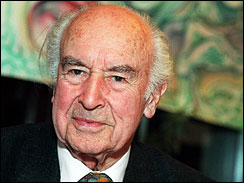
"Uncle Albert" (from the Beatles tune) discovered the mind-altering affects of the drug LSD in 1943 when a chemist in the old Sandoz lab where they worked had a "vorgefühl", loosely translated that's Swiss German for an insightful feeling that something is about to happen. It was originally used to help the psychoanalysis of patients that would not engage in conversation.

LSD later became the drug of choice during the 60's by anyone looking for a mind-expanding experience. Timothy Leary, a psychology professor at Harvard and an early adopter of LSD, experimented with the drug during the 60's on prisoners and himself to explore it's mind-altering effects in controlled environments. He eventually consumed more than 5000 documented hits of acid during his lifetime. He even testified at Senate hearings about the effects and impact of the drug. Because of this, the USA banned the drug completely, including for therapic use.
Hofmann would like to see that US sanction reversed.
Hofmann called LSD "his problem child". Have a read through his papers on "LSD - My Problem Child".
Happy birthday, "Uncle Albert" - and thank you for a gift that opened may minds to new states of consciousness.
.
Dr. Albert Hofmann celebrated his 100th birthday on 11 January 2006 in grand style. The Gaia Media Foundation staged an International Symposium in Basel, Switzerland, on the occasion of his 100th Birthday. They brought 2000 people from all over the world together to discuss LSD (Lysergic Acid Diethylamide), the drug that changed the world.
"Uncle Albert" (from the Beatles tune) discovered the mind-altering affects of the drug LSD in 1943 when a chemist in the old Sandoz lab where they worked had a "vorgefühl", loosely translated that's Swiss German for an insightful feeling that something is about to happen. It was originally used to help the psychoanalysis of patients that would not engage in conversation.
LSD later became the drug of choice during the 60's by anyone looking for a mind-expanding experience. Timothy Leary, a psychology professor at Harvard and an early adopter of LSD, experimented with the drug during the 60's on prisoners and himself to explore it's mind-altering effects in controlled environments. He eventually consumed more than 5000 documented hits of acid during his lifetime. He even testified at Senate hearings about the effects and impact of the drug. Because of this, the USA banned the drug completely, including for therapic use.
Hofmann would like to see that US sanction reversed.
Hofmann called LSD "his problem child". Have a read through his papers on "LSD - My Problem Child".
Happy birthday, "Uncle Albert" - and thank you for a gift that opened may minds to new states of consciousness.
.
Evo Morales & his Simple Message – Please, Partners not Owners for Bolivia
I'm fascinated with what's going on politically in South America. It's not simply about politics - it's about a cultural movement. Bolivia, the poorest country in South America, has a population with 60% indigenous Indians. Their country doesn't even have en economic strategy because it's trying to cope with more basic human issues. They have just elected Evo Morales, the country's first indigenous leader.
Evo may not be polished, but he appears to be a genuine man on a real mission. Evo Morales, the new President of Bolivia, carries this message – that his country is looking for partners, not owners – to the world. During his campaign for President, he promised his people that he would help them bring their culture into their politics. He's seeking justice and equality for people.
As he carries this message from Bolivia to other South American countries, he’s waking the dead. Those countries, also once idealistic, have succumbed to the separation of political power and real socio-economic growth. All eyes are on Bolivia right now. This young man who has built his campaign and message on a strong value proposition – rather than economic or political greed – is carrying a torch of hope for many who live in uncomfortable circumstances and yet do not want to give up their culture for money.

Dressed in his modest sweater rather than a flashy suit, Evo will head to Europe shortly with hopes of enlisting partners to help pave Bolivia’s path to the future, valuable brick by brick. Much like Lula of Brazil, Evo Morales hopes to bring his people a social and culture wealth supported by sustainable economics without destroying it with the rampant greed in so many other countries. The issues at hand are the commerce and wealth that gets generated through the gas industry, but never reaches the people of Bolivia. I wonder what will transpire on this level - to see if there is an opportunity to evolve politics and commerce into a socio-economic development plan for the country.
Bolivia is a land and a mix of indigenous cultures and communities separated by treacherous and beautiful mountains. The 60% majority of the population is indigenous and only a percentage lives in cities like the capital, La Paz. It is a country that may not have much in the context of technology and media, but it is a country rich in community and creativity.
Evo may not be polished, but he appears to be a genuine man on a real mission. Evo Morales, the new President of Bolivia, carries this message – that his country is looking for partners, not owners – to the world. During his campaign for President, he promised his people that he would help them bring their culture into their politics. He's seeking justice and equality for people.
As he carries this message from Bolivia to other South American countries, he’s waking the dead. Those countries, also once idealistic, have succumbed to the separation of political power and real socio-economic growth. All eyes are on Bolivia right now. This young man who has built his campaign and message on a strong value proposition – rather than economic or political greed – is carrying a torch of hope for many who live in uncomfortable circumstances and yet do not want to give up their culture for money.
Dressed in his modest sweater rather than a flashy suit, Evo will head to Europe shortly with hopes of enlisting partners to help pave Bolivia’s path to the future, valuable brick by brick. Much like Lula of Brazil, Evo Morales hopes to bring his people a social and culture wealth supported by sustainable economics without destroying it with the rampant greed in so many other countries. The issues at hand are the commerce and wealth that gets generated through the gas industry, but never reaches the people of Bolivia. I wonder what will transpire on this level - to see if there is an opportunity to evolve politics and commerce into a socio-economic development plan for the country.
Bolivia is a land and a mix of indigenous cultures and communities separated by treacherous and beautiful mountains. The 60% majority of the population is indigenous and only a percentage lives in cities like the capital, La Paz. It is a country that may not have much in the context of technology and media, but it is a country rich in community and creativity.
19 January 2006
What is your Dangerous Idea?
John Brockman, Publisher & Editor at Edge.org asks some of the brightest minds in science and technology to consider one question. This year: What is your dangerous idea?
“The history of science is replete with discoveries that were considered socially, morally, or emotionally dangerous in their time; the Copernican and Darwinian revolutions are the most obvious. What is your dangerous idea? An idea you think about (not necessarily one you originated) that is dangerous not because it is assumed to be false, but because it might be true?”

John says, "What you will find emerging out of the 119 original essays in the 75,000 word document written in response to the 2006 Edge Question — "What is your dangerous idea?" — are indications of a new natural philosophy, founded on the realization of the import of complexity, of evolution. Very complex systems — whether organisms, brains, the biosphere, or the universe itself — were not constructed by design; all have evolved. There is a new set of metaphors to describe ourselves, our minds, the universe, and all of the things we know in it."
My dangerous idea is:
Put the health, education and welfare of a child as the core strategy for every country in the world. This will shape how we grow value, transform the challenges facing us today, and create an opportunity for a brighter, safer, and healthier way of life.
I've been thinking about this in the context of our struggle here in The Netherlands with so many changes and challenges. Is there an idea that you have that would trigger an evolution in values and culture to embrace a new way of creating value for ourselves that includes diversity and creativity?
“The history of science is replete with discoveries that were considered socially, morally, or emotionally dangerous in their time; the Copernican and Darwinian revolutions are the most obvious. What is your dangerous idea? An idea you think about (not necessarily one you originated) that is dangerous not because it is assumed to be false, but because it might be true?”
John says, "What you will find emerging out of the 119 original essays in the 75,000 word document written in response to the 2006 Edge Question — "What is your dangerous idea?" — are indications of a new natural philosophy, founded on the realization of the import of complexity, of evolution. Very complex systems — whether organisms, brains, the biosphere, or the universe itself — were not constructed by design; all have evolved. There is a new set of metaphors to describe ourselves, our minds, the universe, and all of the things we know in it."
My dangerous idea is:
Put the health, education and welfare of a child as the core strategy for every country in the world. This will shape how we grow value, transform the challenges facing us today, and create an opportunity for a brighter, safer, and healthier way of life.
I've been thinking about this in the context of our struggle here in The Netherlands with so many changes and challenges. Is there an idea that you have that would trigger an evolution in values and culture to embrace a new way of creating value for ourselves that includes diversity and creativity?
18 January 2006
IFFCCC Sunday Seminar Series
We delivered our first seminar in our Sunday Series – a sampling of dialogues about the impact of social media on our lives, our work and how we manage information and create value. Though we’ve all had years of experience through our own businesses, this was our first consolidated effort together as The Institute for Collaboration Creativity & Culture (IFCCC). We were experimenting with a new format and it looks like it works from all the feedback we've received.
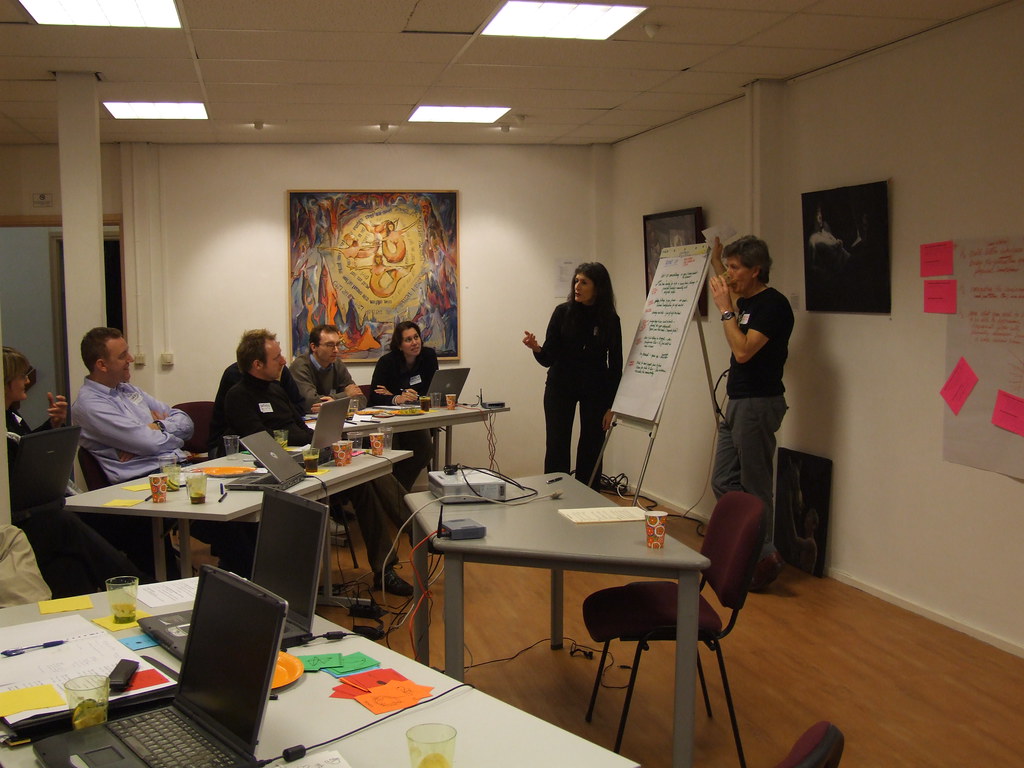
We presented a sampling of 3 presentations from the 14 out of our Social Media seminar series. Normally, each seminar would be a 1 or 2 day event because we ask participants to bring issues from their work into the seminar. We then use those issues as context for discussion and action, with much coaching and interactive engagement. This past Sunday, we engaged the participants in a quickie version, moving them quickly from identifying their wishes and contradictions in their work into 3 mini-presentations: Landscape of Social Media, The Business of Social Media, and Building a Personal Information Strategy. After each presentation, participants each took part in one of 3 round tables: one in context of business, another in context of application, and the other in the context of WIIFM (what’s in it for me). They had to deliver the major issue facing them in the context of what they had just learned in the context of business, application or WIIFM. Each participant had a chance to engage in all 3 round table contexts.
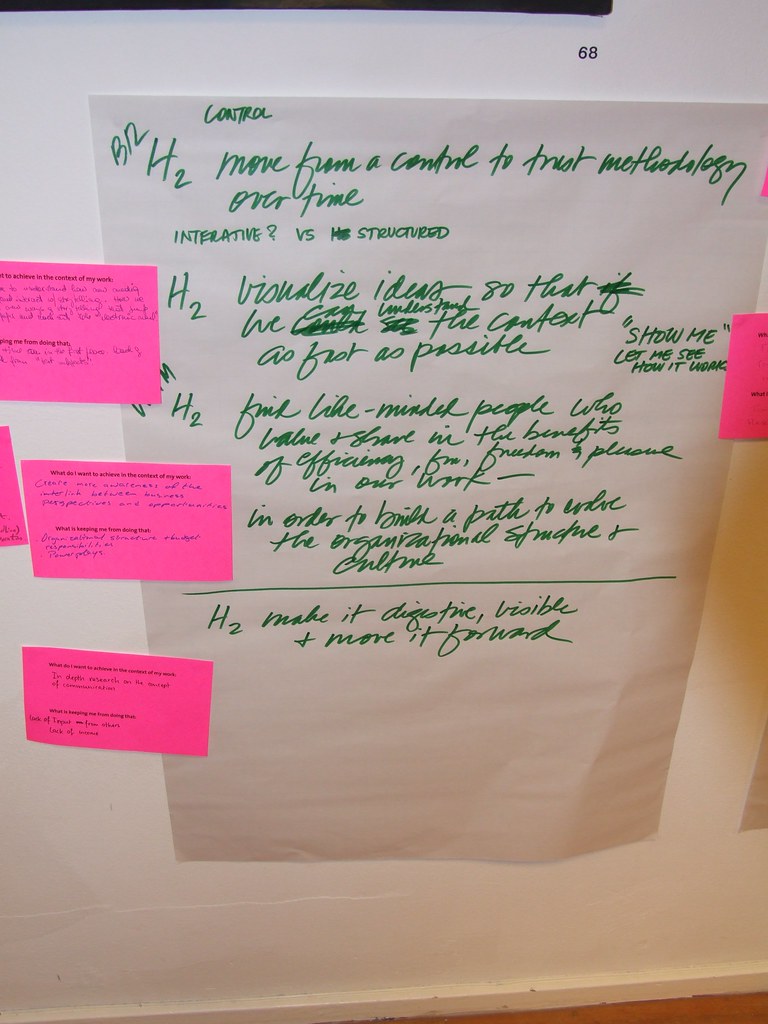
During the round up discussion afterward, we worked with how their wishes and contradictions fit into the 9 major issues they identified. What emerged were 3 glaring contradictions:
-- Control vs. sharing
-- Collecting quantity of names in networking vs making “surprising” connections
-- Distracted by information overload vs. knowing how to connect with the information you want to find
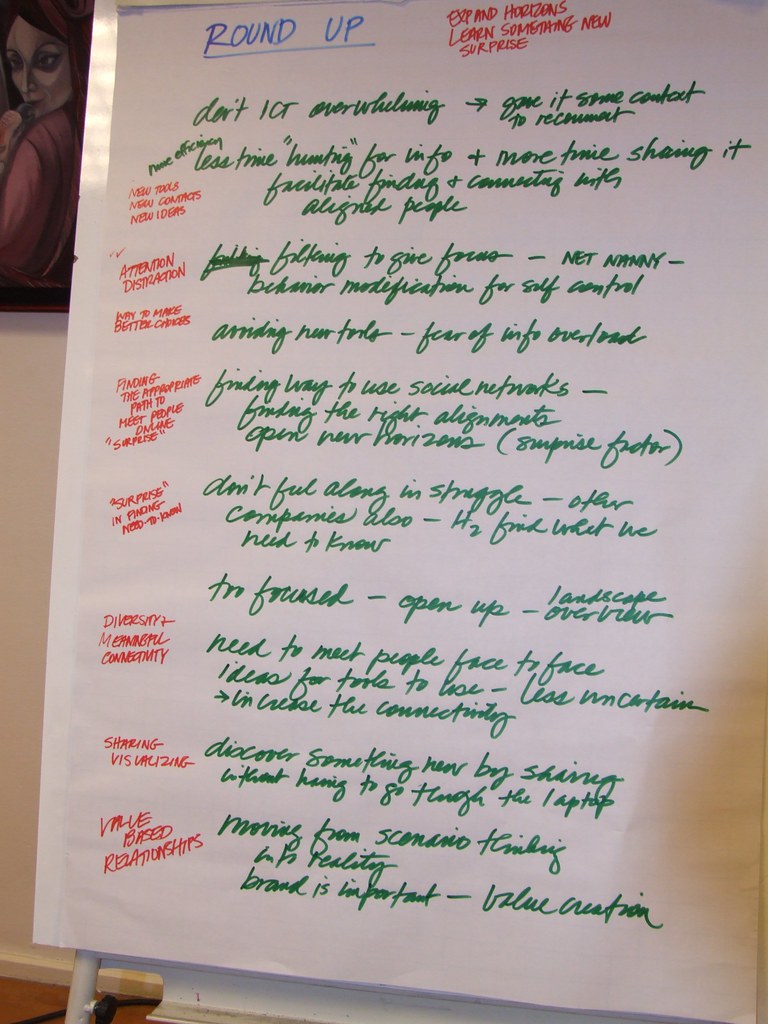
I'm now looking forward to taking this into the deeper seminars so that we actually have the time to work with each person and the context of their work.
We presented a sampling of 3 presentations from the 14 out of our Social Media seminar series. Normally, each seminar would be a 1 or 2 day event because we ask participants to bring issues from their work into the seminar. We then use those issues as context for discussion and action, with much coaching and interactive engagement. This past Sunday, we engaged the participants in a quickie version, moving them quickly from identifying their wishes and contradictions in their work into 3 mini-presentations: Landscape of Social Media, The Business of Social Media, and Building a Personal Information Strategy. After each presentation, participants each took part in one of 3 round tables: one in context of business, another in context of application, and the other in the context of WIIFM (what’s in it for me). They had to deliver the major issue facing them in the context of what they had just learned in the context of business, application or WIIFM. Each participant had a chance to engage in all 3 round table contexts.
During the round up discussion afterward, we worked with how their wishes and contradictions fit into the 9 major issues they identified. What emerged were 3 glaring contradictions:
-- Control vs. sharing
-- Collecting quantity of names in networking vs making “surprising” connections
-- Distracted by information overload vs. knowing how to connect with the information you want to find
I'm now looking forward to taking this into the deeper seminars so that we actually have the time to work with each person and the context of their work.
12 January 2006
Building TagClouds for Presentation
Building TagClouds for my presentation on Sunday on the Business of Social Media. I've already built two...one for Social Media and the other for Findability.
While getting prepared for this, I received an email from someone in Japan. He wanted to use several of my past blogs as part of a presentation on Search. When I went and reviewed them, I realized that most of what I needed was already in my blog. Because I am used to creating everything fresh each time, I hardly ever refer back to my blog. He actually spotlighted the links I needed!
Findability
Archive
Folksonomie
Technorati Mini-Seach
While getting prepared for this, I received an email from someone in Japan. He wanted to use several of my past blogs as part of a presentation on Search. When I went and reviewed them, I realized that most of what I needed was already in my blog. Because I am used to creating everything fresh each time, I hardly ever refer back to my blog. He actually spotlighted the links I needed!
Findability
Archive
Folksonomie
Technorati Mini-Seach
11 January 2006
Building Community
This is a response I wrote about building community on the Amodus platform.
"The most intriguing thing about a community is how the people in that community give shape to it through their contribution and levels of engagement. Community is an emerging proposition. If we are in tune with that, we can probably begin to recognize the true value that gets created on all levels as it emerge and becomes evidence of how we engage and what we share and ultimately what we create together.
As always, with a bit of distance and attention, we will begin to recognize the patterns.
The real beauty is in our story as it evolves - the humanity we share with one another as we reveal parts of ourselves in how we engage and contribute to these discussions. These dialogues are the documentation of this.
Each day as I read through the exchange here, I learn a wee bit more about each one of you."

"The most intriguing thing about a community is how the people in that community give shape to it through their contribution and levels of engagement. Community is an emerging proposition. If we are in tune with that, we can probably begin to recognize the true value that gets created on all levels as it emerge and becomes evidence of how we engage and what we share and ultimately what we create together.
As always, with a bit of distance and attention, we will begin to recognize the patterns.
The real beauty is in our story as it evolves - the humanity we share with one another as we reveal parts of ourselves in how we engage and contribute to these discussions. These dialogues are the documentation of this.
Each day as I read through the exchange here, I learn a wee bit more about each one of you."
9 January 2006
Design your own LEGO
Anyone else out there love LEGO? I'm ordering one of these kits. I've designed a whazzo spaceship. Just visit the LEGO.com Factory Design Homepage and download the software. Read the instructions first and then just go for it!

After you order your design, you can share it and check out the other models you can build with the same LEGO pieces.
After you order your design, you can share it and check out the other models you can build with the same LEGO pieces.
7 January 2006
The Stuff They Should Have Taught You in Business School
Working on two big projects to fulfill creating some new challenges for myself. One is about about bringing your work into your learning environment and your learning into your work environment. The other is about creating meaningful work.
I am currently building a series of masters courses for executives: The Stuff They Should Have Taught You in Business School
Instead of teaching at the graduate school again, I decided to take the content I teach and repackage it for execs in business. I want to make the content relevant for today's networked economy - and put it into the context of personal performance.
Format:
-- series of sessions with lectures, round tables, workshops and coaching
-- supported with online blog, wiki and forum
Deliverable:
Performance advantage instead of a diploma
Course List:
- The Roles of Values in Business - How They Drive Behavior and Choices
- Vision! It's Connection to Purpose
- The Difference between the Brand & its Business Model
- Capturing Value in a Network Economy
- What is Socio-Economic Development
- Collaboration - The Secret to Innovation
- The Evolutionary Brand Called M.E. - My Emergence
- Understanding Human Organizational Systems is Key to Capturing Value
- Wiring Up the Brand without the Wires
- How to Build Scenarios
- Creating Meaning at Work"

I am also developing a format for videoblogs: Meaningful Work
-- Series of interviews with people about what creates meaning for them in their work and what they would love to do that they are not doing now.
-- This is about personal empowerment of the true nature of self, freedom to realize what's possible
If you are interested, please let me know.
I am currently building a series of masters courses for executives: The Stuff They Should Have Taught You in Business School
Instead of teaching at the graduate school again, I decided to take the content I teach and repackage it for execs in business. I want to make the content relevant for today's networked economy - and put it into the context of personal performance.
Format:
-- series of sessions with lectures, round tables, workshops and coaching
-- supported with online blog, wiki and forum
Deliverable:
Performance advantage instead of a diploma
Course List:
- The Roles of Values in Business - How They Drive Behavior and Choices
- Vision! It's Connection to Purpose
- The Difference between the Brand & its Business Model
- Capturing Value in a Network Economy
- What is Socio-Economic Development
- Collaboration - The Secret to Innovation
- The Evolutionary Brand Called M.E. - My Emergence
- Understanding Human Organizational Systems is Key to Capturing Value
- Wiring Up the Brand without the Wires
- How to Build Scenarios
- Creating Meaning at Work"
I am also developing a format for videoblogs: Meaningful Work
-- Series of interviews with people about what creates meaning for them in their work and what they would love to do that they are not doing now.
-- This is about personal empowerment of the true nature of self, freedom to realize what's possible
If you are interested, please let me know.
6 January 2006
Mainstream Media vs Social Media
This follows up on a discussion I've been having with colleagues.
It’s an age-old story … the establishment condescending, critical and busy trying to tear down the young intruders trying to change the old guard. The corporate big guys trying to clear the playing field of anything that gets in the way of their darling little device that builds shareholder value. At that moment in time, they cannot imagine that there is some other value beyond financial capital. But, times are changing. People are worn out from the old way of making money … even the shareholders. We want to create value in a more meaningful way.
OpenSource does not mean no proprietary applications – it means sharing code source so that people can play with it and develop their own applications. What will Microsoft do when people get tired of the struggle and have the power and ease to chose something else?
What’s the impact of this? We’re watching this happen now. We are witnesses to an evolutionary shift in how people, business and brands engage in creating a future of value on many levels.
Some day, Wikipedia will be the mainstream, and perhaps Encyclopedia Britannica might even still exist, standing dusty on the shelves in the old archives building that people will visit to smell the books.
It’s an age-old story … the establishment condescending, critical and busy trying to tear down the young intruders trying to change the old guard. The corporate big guys trying to clear the playing field of anything that gets in the way of their darling little device that builds shareholder value. At that moment in time, they cannot imagine that there is some other value beyond financial capital. But, times are changing. People are worn out from the old way of making money … even the shareholders. We want to create value in a more meaningful way.
OpenSource does not mean no proprietary applications – it means sharing code source so that people can play with it and develop their own applications. What will Microsoft do when people get tired of the struggle and have the power and ease to chose something else?
What’s the impact of this? We’re watching this happen now. We are witnesses to an evolutionary shift in how people, business and brands engage in creating a future of value on many levels.
Some day, Wikipedia will be the mainstream, and perhaps Encyclopedia Britannica might even still exist, standing dusty on the shelves in the old archives building that people will visit to smell the books.
4 January 2006

3 January 2006
Re-Positioning - Week 1
Re-packaging my talents, skills, abilities and IP requires a new profile. Putting my content into new context means re-positioning myself for others who expect me to still deliver the same stuff…the stuff that I no longer enjoy doing. I still want to do the same stuff but in a new way and in an new environment or context. My purpose gets applied in a whole new and different way, for different people. This means new products!
Gone are the old ways of communication and media – replaced by something much more personal and creative. I’m still doing communication, media – but the formats and channels have changed. This is much more dynamic, more edgy, more close to my nature.

Collaboration has always come easy to me. Building creative teams and meshing them with account teams and putting them into a international multi-cultural playing field with lots of strangely diverse clients is part of the advertising and media culture. I want that creative buzz back in my life. Running a biz doesn’t do it.
I figured it out finally - the edge of great teams working out what seems like impossible communication concepts that work in any culture around the world and negotiating them through a political minefield and an impossible budget – now that does it. When it’s right, it clicks. (Watch the film, Sea Biscuit, and you’ll be touched by the strength of spirit that comes alive with the right people and in the right context, not just for the human spirit, but horse spirit as well.)
Social media not only changes the playing field, but, in many ways, levels it. Content and context are rolled into one delicious mix. Knowing how to generate content and position it gives me a new edge in this world.
We no longer need the agencies – we can script the scenarios more authentically, capture them on video and deliver them in multiple formats and through multiple channels with an affordable budget. Social media makes it easy to visualize and communicate strategies important to building a brand and opening new ways to connect and grow value at every contact point. This is much more fun and so much less stressy than advertising. Advertising is heavy, complex, expensive and limited in its reach. Social media is personal and touches people in the right way, with the right message coming through the right channel in the right format with the appropriate products and services that support and connect people, their purpose and their community.

Example: I no longer want to play the role of “the boss”. Instead, I want to replace that role with the role of inner guide or leadership coach, helping younger people build personal strategies on how to create value for themselves and others. This doesn’t mean that I will give up coaching CEO’s or leading groups, but it means that I will expand that specific talent into more collaborative environments. Because I understand business models and the impact they have on corporate choices, this gives me a role in helping corporations build dynamic innovation teams. I still get to create something in the end that produces results and opens up new ways, new products, new formats with new value and new revenue streams.
So, have you thought about repackaging your content lately to make it more relevant?
Gone are the old ways of communication and media – replaced by something much more personal and creative. I’m still doing communication, media – but the formats and channels have changed. This is much more dynamic, more edgy, more close to my nature.
Collaboration has always come easy to me. Building creative teams and meshing them with account teams and putting them into a international multi-cultural playing field with lots of strangely diverse clients is part of the advertising and media culture. I want that creative buzz back in my life. Running a biz doesn’t do it.
I figured it out finally - the edge of great teams working out what seems like impossible communication concepts that work in any culture around the world and negotiating them through a political minefield and an impossible budget – now that does it. When it’s right, it clicks. (Watch the film, Sea Biscuit, and you’ll be touched by the strength of spirit that comes alive with the right people and in the right context, not just for the human spirit, but horse spirit as well.)
Social media not only changes the playing field, but, in many ways, levels it. Content and context are rolled into one delicious mix. Knowing how to generate content and position it gives me a new edge in this world.
We no longer need the agencies – we can script the scenarios more authentically, capture them on video and deliver them in multiple formats and through multiple channels with an affordable budget. Social media makes it easy to visualize and communicate strategies important to building a brand and opening new ways to connect and grow value at every contact point. This is much more fun and so much less stressy than advertising. Advertising is heavy, complex, expensive and limited in its reach. Social media is personal and touches people in the right way, with the right message coming through the right channel in the right format with the appropriate products and services that support and connect people, their purpose and their community.
Example: I no longer want to play the role of “the boss”. Instead, I want to replace that role with the role of inner guide or leadership coach, helping younger people build personal strategies on how to create value for themselves and others. This doesn’t mean that I will give up coaching CEO’s or leading groups, but it means that I will expand that specific talent into more collaborative environments. Because I understand business models and the impact they have on corporate choices, this gives me a role in helping corporations build dynamic innovation teams. I still get to create something in the end that produces results and opens up new ways, new products, new formats with new value and new revenue streams.
So, have you thought about repackaging your content lately to make it more relevant?
2 January 2006
My Resolutions for 2006
1. Take more time to have fun (looks funny when I see this...but I really mean it)
2. Find a publisher for my book – and a really great title - working title “The Evolutionary Brand Called M.E. – My Emergence” (any suggestions welcome)
3. Develop a way to run a project/course in New Mexico so that I can spend some time with my family and deal with auctioning and distributing the house I've had in storage since 1994 ("about time...")
4. Re-package the academic courses I teach into programs for execs
5. Spend more time on creative projects than management projects (get a more enjoyable balance)
Heart's desires
2. Find a publisher for my book – and a really great title - working title “The Evolutionary Brand Called M.E. – My Emergence” (any suggestions welcome)
3. Develop a way to run a project/course in New Mexico so that I can spend some time with my family and deal with auctioning and distributing the house I've had in storage since 1994 ("about time...")
4. Re-package the academic courses I teach into programs for execs
5. Spend more time on creative projects than management projects (get a more enjoyable balance)
Heart's desires
Bloglines Moves to New Server
Bloglines - the RSS aggregator I use online - had been very slow lately, so I am pleased with the performance of their new server. Looks like they made the transition rather painlessly for us.

30 December 2005
Re-Mix, Re-Package & Re-Purpose
This past week has brought many loose ideas, people and ways together through my on-going close-out-the-year conversations. The one issue that keeps rising to the surface in almost all of those discussions is personal leadership.
My prediction for 2006 is simple:
People will spend more time packaging their talents, skills and connections in new ways to make themselves more relevant for communities and organizations much more aligned with what they believe in and what they want to achieve that delivers human, social, creative and financial value.
That means that the role of coaches and guides will become more important than ever before if organizations are going to get the right talent in the right roles.
I wish you a year filled with joy, adventure and wonder for 2006.
My prediction for 2006 is simple:
People will spend more time packaging their talents, skills and connections in new ways to make themselves more relevant for communities and organizations much more aligned with what they believe in and what they want to achieve that delivers human, social, creative and financial value.
That means that the role of coaches and guides will become more important than ever before if organizations are going to get the right talent in the right roles.
I wish you a year filled with joy, adventure and wonder for 2006.
27 December 2005
Looking back on 2005
As I look back on 2005 to take a measurement of what happened, what created new value, and what I said goodbye to, I realize that I rarely look back. I am always so busy with the here and now that I often do not take the time to review and evaluate on a longer term "look back".
I want to review what created "impact" in my life on a new value level. Over the next few days, I am taking the time to really have a look at what has impacted my personal world, my working world, my creative world, my academic world and my inner world.
Just off the top of my head, I can immediately see that my partners in IFCCC have contributed to my growth and enjoyment of work and life. New technology always plays a role, but in 2005 I realized that capturing sets of tools and applying new technology could be a new value path. This also has something to do with realizing that I can repackage much of my content and repurpose it to create value in new environments and for new groups of people.
2005 was a year of letting go of old ways - mostly old family habits - and giving myself permission to make myself the center of my own world and not feel obliged to always do what's expected. So, I surprised people this year and shared myself in a new ways. I think this was connected to a renewed yoga practice because of a very special teacher.
So, I am drawing and mapping out what impacted my life and created value in 2005. With that in hand, I will map out a new vision for moving forward with some solid steps for repackaging many of my "products" and services so that I can use them to help others become more collaborative, more creative and more connected.
I want to review what created "impact" in my life on a new value level. Over the next few days, I am taking the time to really have a look at what has impacted my personal world, my working world, my creative world, my academic world and my inner world.
Just off the top of my head, I can immediately see that my partners in IFCCC have contributed to my growth and enjoyment of work and life. New technology always plays a role, but in 2005 I realized that capturing sets of tools and applying new technology could be a new value path. This also has something to do with realizing that I can repackage much of my content and repurpose it to create value in new environments and for new groups of people.
2005 was a year of letting go of old ways - mostly old family habits - and giving myself permission to make myself the center of my own world and not feel obliged to always do what's expected. So, I surprised people this year and shared myself in a new ways. I think this was connected to a renewed yoga practice because of a very special teacher.
So, I am drawing and mapping out what impacted my life and created value in 2005. With that in hand, I will map out a new vision for moving forward with some solid steps for repackaging many of my "products" and services so that I can use them to help others become more collaborative, more creative and more connected.
Internet has 1 Billion Users!
Just discovered this on Web Pro News, and I'm still trying to get my head around what the read implications of this could be.
One Billion Web Users Need Better Websites
By: Jason Lee Miller
Some time this year, the number of Internet users reached one
billion. Billion with a "b." If you count to one billion at one
number per second, it would take you over 31 years to finish. It has
taken the Internet 36 years to count that high, says web usability
expert and former Sun Microsystems engineer Dr. Jakob Nielsen. The
next 10 years will bring the second billion, growing at an annual
rate of 18 percent, and will include unprecedented numbers from Asia
and senior citizens-and that has huge implications in e-commerce.
Statistically, says Nielsen, the one billionth online user was a
24-year-old woman in Shanghai. Only 23 percent come from North
America, leaving 24 percent in Europe and 36 percent in Asia. By
2015, though accounting for nearly one-third of e-commerce, North
Americans will consist of only 15 percent of Internet users.
"This means that for e-commerce to fulfill its potential to double,
sites must be more systematic at following the e-commerce usability
guidelines. Selling to the 200 million early adopters was easy. The
800 million mainstream users who are now starting to shop need much
smoother sites; the next billion will require even higher usability
levels," writes Nielsen.
One Billion Web Users Need Better Websites
By: Jason Lee Miller
Some time this year, the number of Internet users reached one
billion. Billion with a "b." If you count to one billion at one
number per second, it would take you over 31 years to finish. It has
taken the Internet 36 years to count that high, says web usability
expert and former Sun Microsystems engineer Dr. Jakob Nielsen. The
next 10 years will bring the second billion, growing at an annual
rate of 18 percent, and will include unprecedented numbers from Asia
and senior citizens-and that has huge implications in e-commerce.
Statistically, says Nielsen, the one billionth online user was a
24-year-old woman in Shanghai. Only 23 percent come from North
America, leaving 24 percent in Europe and 36 percent in Asia. By
2015, though accounting for nearly one-third of e-commerce, North
Americans will consist of only 15 percent of Internet users.
"This means that for e-commerce to fulfill its potential to double,
sites must be more systematic at following the e-commerce usability
guidelines. Selling to the 200 million early adopters was easy. The
800 million mainstream users who are now starting to shop need much
smoother sites; the next billion will require even higher usability
levels," writes Nielsen.
22 December 2005
Charles Dickens Festival Amsterdam
Last Sunday, the 18th of December, we filmed and photographed the Charles Dickens Festival on Da Costaplein in Amsterdam. This was a neighborhood event organized by Monique Jansen.
Monique's 91 year old grandmother is my neighbor, so they knew I was busy with filming things because I am always carrying camera equipment around. They asked me in the summer if I would film the event. I actually felt honored because it meant they saw me as part of the community and the neighborhood.
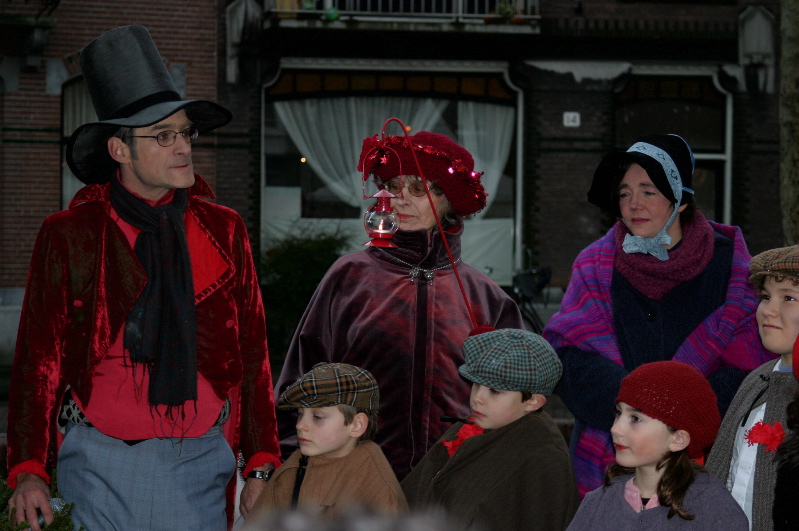
This was a magical day. In 18 years of living here, I had never experienced such a sense of community, sharing, and enjoyment. There were stands with soup and hot mulled wine or hot chocolate. Kids performed their version of Dickens' The Christmas Story with Tiny Tim and Scrooge. People wandered about in period costumes. A sort of "Barber Shop Quartet" sang old standards - and, of course, there were carolers and dancers, too.
The atmosphere was rich in smells, sounds and colors - like stage set for theater, which it was, for 6 hours. One performance after another, effortlessly, and seemingly integrated with the audience. We even had snow blowing around.

Have a look at the photos from the day. I am still busy editing the video, but the cuts look good. Jonathan Marks and Sierd Loman did a great job with the camera work - many thanks to them.
Monique's 91 year old grandmother is my neighbor, so they knew I was busy with filming things because I am always carrying camera equipment around. They asked me in the summer if I would film the event. I actually felt honored because it meant they saw me as part of the community and the neighborhood.
This was a magical day. In 18 years of living here, I had never experienced such a sense of community, sharing, and enjoyment. There were stands with soup and hot mulled wine or hot chocolate. Kids performed their version of Dickens' The Christmas Story with Tiny Tim and Scrooge. People wandered about in period costumes. A sort of "Barber Shop Quartet" sang old standards - and, of course, there were carolers and dancers, too.
The atmosphere was rich in smells, sounds and colors - like stage set for theater, which it was, for 6 hours. One performance after another, effortlessly, and seemingly integrated with the audience. We even had snow blowing around.
Have a look at the photos from the day. I am still busy editing the video, but the cuts look good. Jonathan Marks and Sierd Loman did a great job with the camera work - many thanks to them.
21 December 2005
Hopi Elders Speak
This is for my friend, Kerry Santo, who is struggling right now as she tries to bring an idea movement alive called Modo Fac Central.
This piece was delivered by The Elders, Oraibi, Arizona, Hopi Nation:
"You have been telling the people that this is the Eleventh Hour.
Now you must go back and tell the people that this is The Hour.
There are things to be considered:
Where are you living?
What are you doing?
What are your relationships?
Are you in right relation?
Where is your water?
Know your garden.
It is time to speak your Truth.
Create your community.
Be good to each other.
And do not look outside yourself for the leader.
This could be a good time!
There is a river flowing now very fast.
It is so great and swift that there are those who will be afraid.
They will try to hold on to the shore.
They will feel they are being torn apart, and they will suffer greatly.
Know the river has its destination.
The elders say we must let go of the shore, push off into the middle of the river, keep our eyes open, and our heads above the water.
See who is in there with you and celebrate.
At this time in history, we are to take nothing personally. Least of all, ourselves.
For the moment that we do, our spiritual growth and journey comes to a halt.
The time of the lone wolf is over.
Gather yourselves!
Banish the word struggle from your attitude and vocabulary.
All that we do now must be done in a sacred manner and in celebration.
We are the ones we've been waiting for."

This piece was delivered by The Elders, Oraibi, Arizona, Hopi Nation:
"You have been telling the people that this is the Eleventh Hour.
Now you must go back and tell the people that this is The Hour.
There are things to be considered:
Where are you living?
What are you doing?
What are your relationships?
Are you in right relation?
Where is your water?
Know your garden.
It is time to speak your Truth.
Create your community.
Be good to each other.
And do not look outside yourself for the leader.
This could be a good time!
There is a river flowing now very fast.
It is so great and swift that there are those who will be afraid.
They will try to hold on to the shore.
They will feel they are being torn apart, and they will suffer greatly.
Know the river has its destination.
The elders say we must let go of the shore, push off into the middle of the river, keep our eyes open, and our heads above the water.
See who is in there with you and celebrate.
At this time in history, we are to take nothing personally. Least of all, ourselves.
For the moment that we do, our spiritual growth and journey comes to a halt.
The time of the lone wolf is over.
Gather yourselves!
Banish the word struggle from your attitude and vocabulary.
All that we do now must be done in a sacred manner and in celebration.
We are the ones we've been waiting for."
15 December 2005
Yahoo!-li.cio.us
Joshua Schachter sold Del.icio.us to Yahoo last week! That takes tagging into the mainstream now. I wonder whether Yahoo! is going to try and combine or somehow blend My Web2.0 into Del.icio.us.
It's interesting to watch how Yahoo! is building its innovative strength by buying unique and successful social media brands that have opened up categories - like Flickr (for photo storage, sharing and tagging) and Del.icio.us (for bookmark storage, sharing and tagging). Nice strategy to compete with Google, who innovates by invention.
Makes me wonder who's next? Could be that ex-Yahoolian, Seth Godin, had an instinct when he started Squidoo. Speaking of Squidoo, they are struggling with a wee bit of technical difficulty today. I really do love developing those Squidoo lenses.
It's interesting to watch how Yahoo! is building its innovative strength by buying unique and successful social media brands that have opened up categories - like Flickr (for photo storage, sharing and tagging) and Del.icio.us (for bookmark storage, sharing and tagging). Nice strategy to compete with Google, who innovates by invention.
Makes me wonder who's next? Could be that ex-Yahoolian, Seth Godin, had an instinct when he started Squidoo. Speaking of Squidoo, they are struggling with a wee bit of technical difficulty today. I really do love developing those Squidoo lenses.
14 December 2005
Technorati Kitchen - What's Cooking?
Technorati Kitchen is a place where you can explore the hottest blogs on any topic.

You can post projects that are not ready for the world but need feedback. You can contribute things to do with gadgets or announce great new ones. You can learn about new tools for design or technology or make the connections for venture capital.
The right-hand column lists contributions that are "fully baked" or "half baked".
There's even a feedback form to help Technorati further develop this concept of exploring.
You can post projects that are not ready for the world but need feedback. You can contribute things to do with gadgets or announce great new ones. You can learn about new tools for design or technology or make the connections for venture capital.
The right-hand column lists contributions that are "fully baked" or "half baked".
There's even a feedback form to help Technorati further develop this concept of exploring.
12 December 2005
An Evening Crossing Signals on Innovation
Last Wednesday evening, I attended a knowledge sharing session hosted by Crossing Signals at Kasteel Wittenburg.

Rudy Hoeboer is championing collaboration at the business level to stimulate innovative thinking and practices between people at work. He and Mathijs van Zutphen opened the evening with a discussion about the philosphy behind collaboration and innovation. They then introduced Valeri Souchkov from ICG Training & Consulting.
Valeri presented us with the background to TRIZ, Systematic Innovation Techniques. We even got to play with a "contradiction". I love using this word instead of problem. If I walked away with anything from that evening, it is using this word "contradiction", perhaps because it's a word with perspective, whereas "problem" has such a judgment attached to its meaning. Valeri asked us to choose a positive and a negative contradiction so that he could demonstrate how TRIZ works.
Ton presented a wonderful set: negative = too many resources and time to bring in business; positive = smaller projects much better aligned with strengths and desires to generate more satisfaction.
Valeri used his matrix to identify which principles we should apply. There are 5 levels of innovation, and most companies remain working at level one. Even the most brilliant and innovative rarely generate new thinking or ideas at a level higher than 3. Level 5 requires changes principles. The one principle that stimulated our thinking the most was "holes" - look for the holes, spaces, gaps, missing pieces.
I am interested in playing around a bit more with Valeri on developing a visual software for clarifying the meaning of concepts that take on different meaning in different cultures. We'll see what happens.
Thanks, Rudy, for the invitation...and apologies for the incredible mispelling of your last name! (I'm still giggling...)
Rudy Hoeboer is championing collaboration at the business level to stimulate innovative thinking and practices between people at work. He and Mathijs van Zutphen opened the evening with a discussion about the philosphy behind collaboration and innovation. They then introduced Valeri Souchkov from ICG Training & Consulting.
Valeri presented us with the background to TRIZ, Systematic Innovation Techniques. We even got to play with a "contradiction". I love using this word instead of problem. If I walked away with anything from that evening, it is using this word "contradiction", perhaps because it's a word with perspective, whereas "problem" has such a judgment attached to its meaning. Valeri asked us to choose a positive and a negative contradiction so that he could demonstrate how TRIZ works.
Ton presented a wonderful set: negative = too many resources and time to bring in business; positive = smaller projects much better aligned with strengths and desires to generate more satisfaction.
Valeri used his matrix to identify which principles we should apply. There are 5 levels of innovation, and most companies remain working at level one. Even the most brilliant and innovative rarely generate new thinking or ideas at a level higher than 3. Level 5 requires changes principles. The one principle that stimulated our thinking the most was "holes" - look for the holes, spaces, gaps, missing pieces.
I am interested in playing around a bit more with Valeri on developing a visual software for clarifying the meaning of concepts that take on different meaning in different cultures. We'll see what happens.
Thanks, Rudy, for the invitation...and apologies for the incredible mispelling of your last name! (I'm still giggling...)
8 December 2005
Parallel DNS System Proposed by Dutch Company
A Dutch company - UnifiedRoot - is introducing a new generation of internet domain names "around the dot". They are offering top level domains (TLD's) with sub-level domains using the name of a person or the company, or actually any name we choose, as the suffix.
This means we can really personalize our domains and clean up the web architecture for our sites. Instead of having to claim several domains - ifccc.org, ifccc.com, ifccc.net, etc. - we could just claim our name as the suffix and then use that to build a more cohesive web domain archtecture. For instance, instead of IFCCC.org, we could use www.wiki.ifccc or www.forum.ifccc or www.projects.ifccc. We could then adapt our email to colby@amsterdam.ifccc or jonathan@london.ifccc. This makes a lot of sense.
This new generation domain system proposed by UnifiedRoot offers us a much more intuitive way to build our Internet addresses and web architecture. This has lots of benefits for users - easy to remember, easy to navigate, less confusion with other companies, branded and personalized.

UnifiedRoot has already established 13 master root servers around the world to handle this domain name system (DNS).
By doing this, UnifiedRoot creates a contradiction for the Internet's principle DNS, run by the Internet Corporation for Assigned Names and Numbers (ICANN), because it establishes a parallel DNS system.
What does this mean for our ISP's? They will need to add these newly established DNS servers from UnifiedRoot in their DNS server directories. European ISP Tiscali has already made the change, along with several local ISPs in Turkey.
We're always looking for examples of real innovation here in The Netherlands - well, this is definitely one!
Unified Root is a B.V. based in Amsterdam, and their managing director is Erik Seeboldt.
This means we can really personalize our domains and clean up the web architecture for our sites. Instead of having to claim several domains - ifccc.org, ifccc.com, ifccc.net, etc. - we could just claim our name as the suffix and then use that to build a more cohesive web domain archtecture. For instance, instead of IFCCC.org, we could use www.wiki.ifccc or www.forum.ifccc or www.projects.ifccc. We could then adapt our email to colby@amsterdam.ifccc or jonathan@london.ifccc. This makes a lot of sense.
This new generation domain system proposed by UnifiedRoot offers us a much more intuitive way to build our Internet addresses and web architecture. This has lots of benefits for users - easy to remember, easy to navigate, less confusion with other companies, branded and personalized.
UnifiedRoot has already established 13 master root servers around the world to handle this domain name system (DNS).
By doing this, UnifiedRoot creates a contradiction for the Internet's principle DNS, run by the Internet Corporation for Assigned Names and Numbers (ICANN), because it establishes a parallel DNS system.
What does this mean for our ISP's? They will need to add these newly established DNS servers from UnifiedRoot in their DNS server directories. European ISP Tiscali has already made the change, along with several local ISPs in Turkey.
We're always looking for examples of real innovation here in The Netherlands - well, this is definitely one!
Unified Root is a B.V. based in Amsterdam, and their managing director is Erik Seeboldt.
6 December 2005
Squidoo is almost ready for release!
Though it is still in beta mode, Seth Godin has once again created a whazzo marketing tool for ideas - Squidoo.

Squidoo is an online social application equipped with RSS, a module formatted template, supported by Google Ads, and has a network of lenses created by individuals about their specialities.

Many of us have been developing lenses, playing with how to put them together, and feeding back through a dynamic Squidoo team. Why have we been doing this? First, it's FUN! But, more importantly, Squidoo is a tool for showcasing ideas, topics, business practices. It's easy-to-read-and-find format creates a "lens" or filter through which viewers can find, learn and access the information about that subject matter.
Because we tag our lenses and keep them "live" through RSS feeds and updated links, they are perfect formats for Google Ads. Once Squidoo is out of beta, each lens will become a revenue stream for the developer of the lens - as well as a window into their expertise or knowledge or connections to a certain topic.
Anyway, I've had fun building some lenses and sharing my feedback. Here's a preview into one of the lenses I built: Squidoo Lens: How to Connect Using SocialMedia
Here's the list of the TOP 100 Squidoo Lenses.
Once Squidoo is out of beta, you should build lenses too and connect them to your site or blog or use them to market yourself.
Squidoo is an online social application equipped with RSS, a module formatted template, supported by Google Ads, and has a network of lenses created by individuals about their specialities.
Many of us have been developing lenses, playing with how to put them together, and feeding back through a dynamic Squidoo team. Why have we been doing this? First, it's FUN! But, more importantly, Squidoo is a tool for showcasing ideas, topics, business practices. It's easy-to-read-and-find format creates a "lens" or filter through which viewers can find, learn and access the information about that subject matter.
Because we tag our lenses and keep them "live" through RSS feeds and updated links, they are perfect formats for Google Ads. Once Squidoo is out of beta, each lens will become a revenue stream for the developer of the lens - as well as a window into their expertise or knowledge or connections to a certain topic.
Anyway, I've had fun building some lenses and sharing my feedback. Here's a preview into one of the lenses I built: Squidoo Lens: How to Connect Using SocialMedia
Here's the list of the TOP 100 Squidoo Lenses.
Once Squidoo is out of beta, you should build lenses too and connect them to your site or blog or use them to market yourself.
5 December 2005
Google Calendar Expected Tomorrow
Just in from Inside Google blog Google Calendar Expected Tomorrow Read whole story there.
"Rumor is that Google will unveil the long-ago rumored Google Calendar at Tuesday’s When 2.0 conference at Stanford. Will Google Calendar use some company’s calendar format, a brand-new incompatible format , offer converters from but not to other formats , or will Google do the smart and diplomatic thing? Will Google Calendar steal some of Microsoft’s thunder and support RSS SSE?"
via Inside Google and Findory
"Rumor is that Google will unveil the long-ago rumored Google Calendar at Tuesday’s When 2.0 conference at Stanford. Will Google Calendar use some company’s calendar format, a brand-new incompatible format , offer converters from but not to other formats , or will Google do the smart and diplomatic thing? Will Google Calendar steal some of Microsoft’s thunder and support RSS SSE?"
via Inside Google and Findory
Sinterklaas 5 December
This evening, most Dutch families will celebrate Sinterklaas with presents, poems and candies. It is a very intimate family tradition.

Sinterklaas arrives in each Dutch town on a big white horse and has a big red book with the names of all children and how they have behaved over the past year. If a child has been good, they get a present and a chocolate letter of the initial from their first name with traditional candies and cookies. If a child has been naughty, he expects to get "lashed" with the branches from "Black Pete", one of Sinterklaas' assistants - and then get stuffed into Sinterklaas' bag and taken to Spain for the year to learn how to behave.
Every child knows this will never happen, but parents use the threat anyway because it is part of their tradition.
Grown-ups give each other a "review" of the past year in rhyme, which gives them a chance to say what they've wanted to say all year long about each other.
St. Nickolas was originally a bishop in the town of Mira in southern Turkey hundreds of years ago. He was left an orphan with a large inheritance, which he unselfishly spent on all the people and, particularly, children in need.
Black Pete is actually a bit of a politically incorrect character in these days with his painted black face.
I can't wait to share the poems tonight!
Sinterklaas arrives in each Dutch town on a big white horse and has a big red book with the names of all children and how they have behaved over the past year. If a child has been good, they get a present and a chocolate letter of the initial from their first name with traditional candies and cookies. If a child has been naughty, he expects to get "lashed" with the branches from "Black Pete", one of Sinterklaas' assistants - and then get stuffed into Sinterklaas' bag and taken to Spain for the year to learn how to behave.
Every child knows this will never happen, but parents use the threat anyway because it is part of their tradition.
Grown-ups give each other a "review" of the past year in rhyme, which gives them a chance to say what they've wanted to say all year long about each other.
St. Nickolas was originally a bishop in the town of Mira in southern Turkey hundreds of years ago. He was left an orphan with a large inheritance, which he unselfishly spent on all the people and, particularly, children in need.
Black Pete is actually a bit of a politically incorrect character in these days with his painted black face.
I can't wait to share the poems tonight!
1 December 2005
The Future of Software Architecture
Yesterday evening, I attended a "speaker & discussion event" - The Future of Software Architecture - put together by The Club of Amsterdam. It was held in the offices of Syntens.
The discussion after the speakers covered a wide scope of views. The heart of the discussion wasn't really about software architecture, but more along the lines of people's and society's relationship with business. The core issue about the future of software architecture seemed to lie somewhere between:
.....having enough time to invest in developing real solutions rather than holding the solution hostage by business politics
.....and educational standards that leave children without the knowledge to contribute at a level higher than business tasking.
What I also heard - from those not involved in the field of computer sciences - was a voice for the human factor and the human value system. Is the role of software keeping our children from learning - or is it helping our children learn differently? Should computers reflect our human capacity for emotion? This raised the conversation to another level until one young man tried to turn the discussion into an instrumental talk about learning about software architecture. Thankfully, the group did not want to let go of the more philosophical discussion about the "future of...".
These discourses stimulated by the Club of Amsterdam help to build our knowledge and give us a venue to share our thinking on topical issues. We meet interesting minds, help address the issues in our society, and grow relationships.
In the beginning of the evening, I though "Uh-oh.." when the host started to literally read from a PowerPoint presentation about her company, Syntens. Rather than share why syntens had hosted the evening and what role they play in the context of the subject, she opted for reading a sales pitch. Lost opportunity to engage themselves in the evening.
Thankfully, that ended quickly and Maarten Boasson, a professor at the University of Amsterdam shared his views on the issues of developing software architecture in today's world. Though Maarten didn't hold out many hopes for the future of software architecture, he did address the stumbling blocks to success. Big issue: clients with their own agenda opting for software development based on an already chosen, politically motivated solution, rather than letting the architect develop a solution based on identified parameters guided by the real problem. Another big issue: the academic standards that leave us with a pool of talent that do not have the abilities needed to think about solutions for addressing the real problems.
The second speaker was Maarten Visser, an young and enthusiastic entrepreneurial evangelist for social software and the value it creates for business, people and society. He visually demonstrated the integration of the different layers of technology their construction into web applications and interfaces.
The third speaker, Niek Jetten, presented the issues facing business right now with integrating new systems with legacy systems.
This gave us three completely different perspectives of approach and interest - as well as age.
The discussion after the speakers covered a wide scope of views. The heart of the discussion wasn't really about software architecture, but more along the lines of people's and society's relationship with business. The core issue about the future of software architecture seemed to lie somewhere between:
.....having enough time to invest in developing real solutions rather than holding the solution hostage by business politics
.....and educational standards that leave children without the knowledge to contribute at a level higher than business tasking.
What I also heard - from those not involved in the field of computer sciences - was a voice for the human factor and the human value system. Is the role of software keeping our children from learning - or is it helping our children learn differently? Should computers reflect our human capacity for emotion? This raised the conversation to another level until one young man tried to turn the discussion into an instrumental talk about learning about software architecture. Thankfully, the group did not want to let go of the more philosophical discussion about the "future of...".
These discourses stimulated by the Club of Amsterdam help to build our knowledge and give us a venue to share our thinking on topical issues. We meet interesting minds, help address the issues in our society, and grow relationships.
In the beginning of the evening, I though "Uh-oh.." when the host started to literally read from a PowerPoint presentation about her company, Syntens. Rather than share why syntens had hosted the evening and what role they play in the context of the subject, she opted for reading a sales pitch. Lost opportunity to engage themselves in the evening.
Thankfully, that ended quickly and Maarten Boasson, a professor at the University of Amsterdam shared his views on the issues of developing software architecture in today's world. Though Maarten didn't hold out many hopes for the future of software architecture, he did address the stumbling blocks to success. Big issue: clients with their own agenda opting for software development based on an already chosen, politically motivated solution, rather than letting the architect develop a solution based on identified parameters guided by the real problem. Another big issue: the academic standards that leave us with a pool of talent that do not have the abilities needed to think about solutions for addressing the real problems.
The second speaker was Maarten Visser, an young and enthusiastic entrepreneurial evangelist for social software and the value it creates for business, people and society. He visually demonstrated the integration of the different layers of technology their construction into web applications and interfaces.
The third speaker, Niek Jetten, presented the issues facing business right now with integrating new systems with legacy systems.
This gave us three completely different perspectives of approach and interest - as well as age.
Subscribe to:
Posts (Atom)